From Manila Folders to OCDBees: How It All Began in Downtown Jacksonville
Written by Adam Schaffer
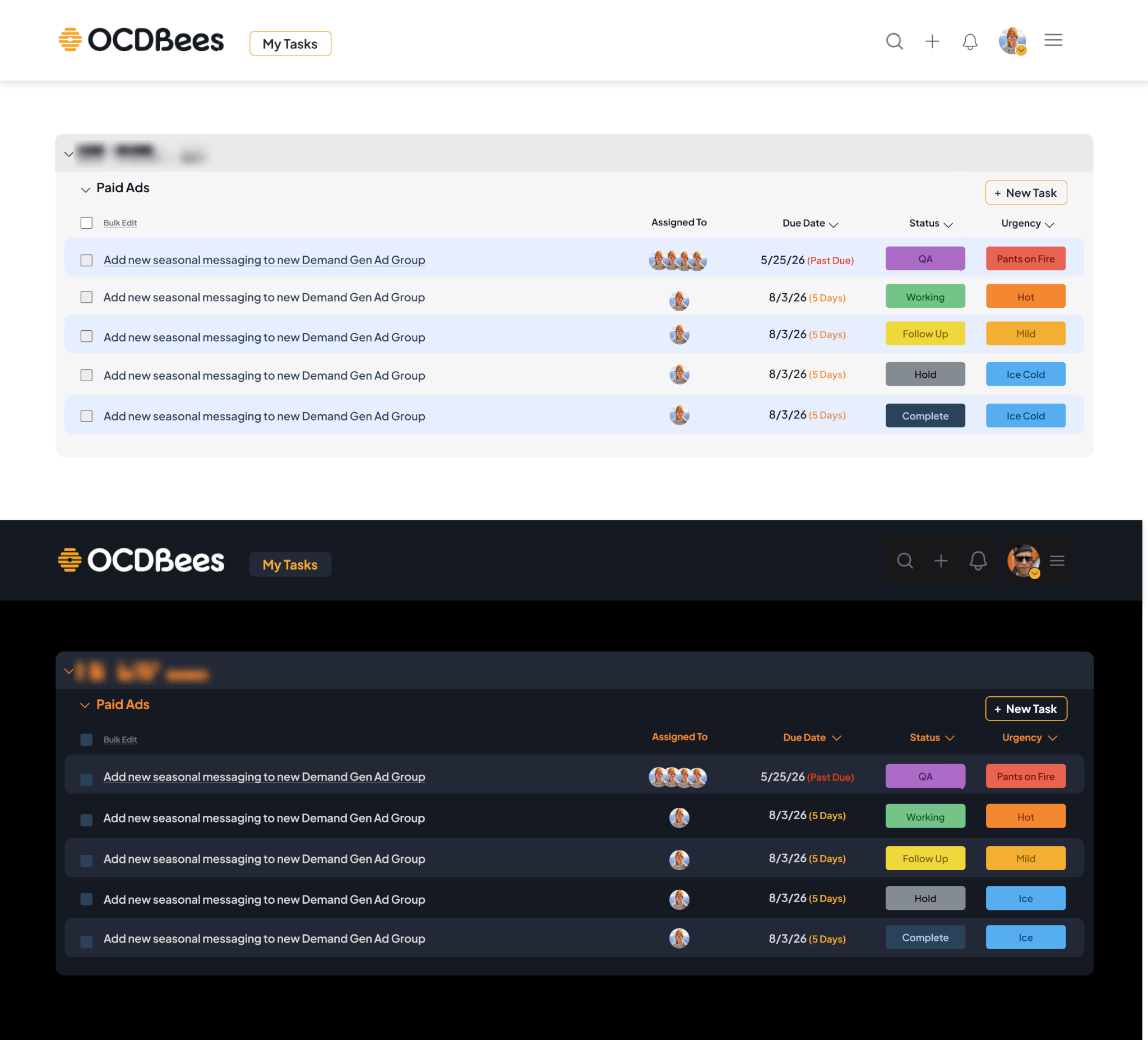
Before project management platforms, dashboards, and endless notifications, there were manila folders. I spent years at large creative agencies where work landed on my desk in stacks of them, some marked HOT and others marked FIRE. You didn’t need a meeting to know what that meant. Every folder was a job with an owner, someone waiting on it, and its urgency written right on the front. It wasn’t sophisticated, but it worked.
Years later, running our own creative agency in downtown Jacksonville, we had a different problem. We were paying more and more for project management software that did far more than we needed and somehow did the things we actually needed worse. Our team was expected to change how we worked to fit the software, with new workflows and processes replacing ones that had worked just fine. At some point, I got fed up.
The short version, for the skimmers: OCDBees is a simple project management tool that we built inside 5ivecanons, a creative agency in downtown Jacksonville, Florida, to run our own client work. It organizes clients, projects, and tasks, and it marks urgency the way our old manila folders did: Pants on Fire, Hot, Mild, or Ice Cold. We used it every day for more than a decade, rebuilt it more than once, and introduced it to the public at Adobe MAX 2026 in Miami Beach. It costs $3 per user, per month.
It Started With a Sheet of Paper
One day, sitting in the lobby of our building in downtown Jacksonville, I sketched what I thought a project management platform should look like. Nothing fancy, just a sheet of paper and a simple interface. I handed it to our lead developer and asked, “Can we make this?” A few more sheets of paper and a lot of conversations about how the team actually worked later, those sketches became our first designs and pages. Before long, we were using our own software to manage the projects we were building for clients.
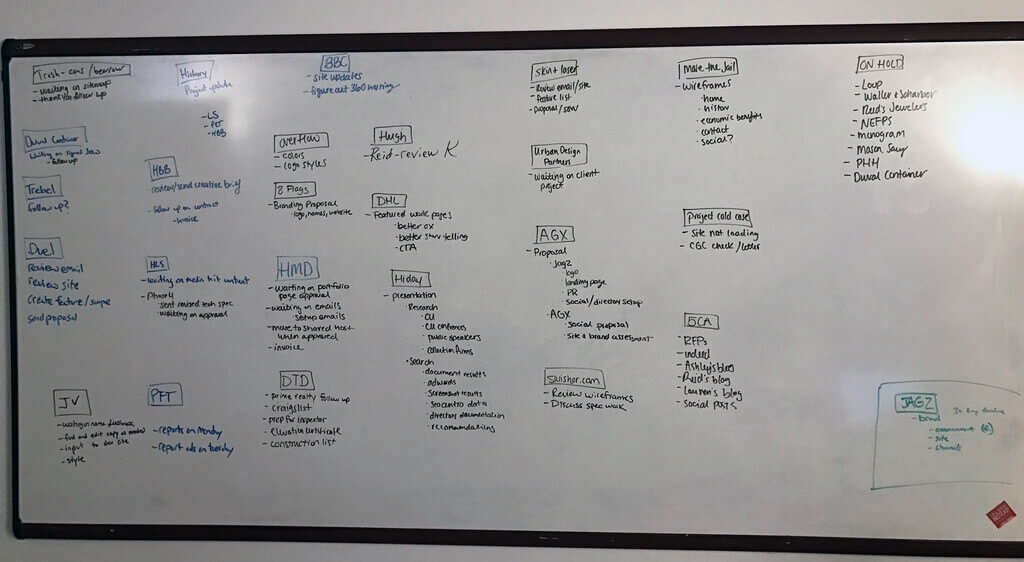
The first version was built in Ruby on Rails. It wasn’t trying to reinvent project management, just make it less painful, and it worked. We could fly through projects and tasks, see who owned what, and know what needed attention without another meeting, spreadsheet, or whiteboard. Nobody had to walk in and ask what we were working on or what their fires were that day. Best of all, nobody had to decipher my whiteboard handwriting, which falls somewhere between a doctor’s prescription and a two-year-old’s first attempt at cursive. We had built exactly what we needed.
More Than a Decade of Getting Things Done
We didn’t build OCDBees to sell it. We built it to use it. We did take an early beta to Jacksonville’s One Spark festival to see what kind of interest and feedback it would get, but it stayed in beta and never really came to market. Mostly, it just went back to work, and it stayed there for more than a decade.
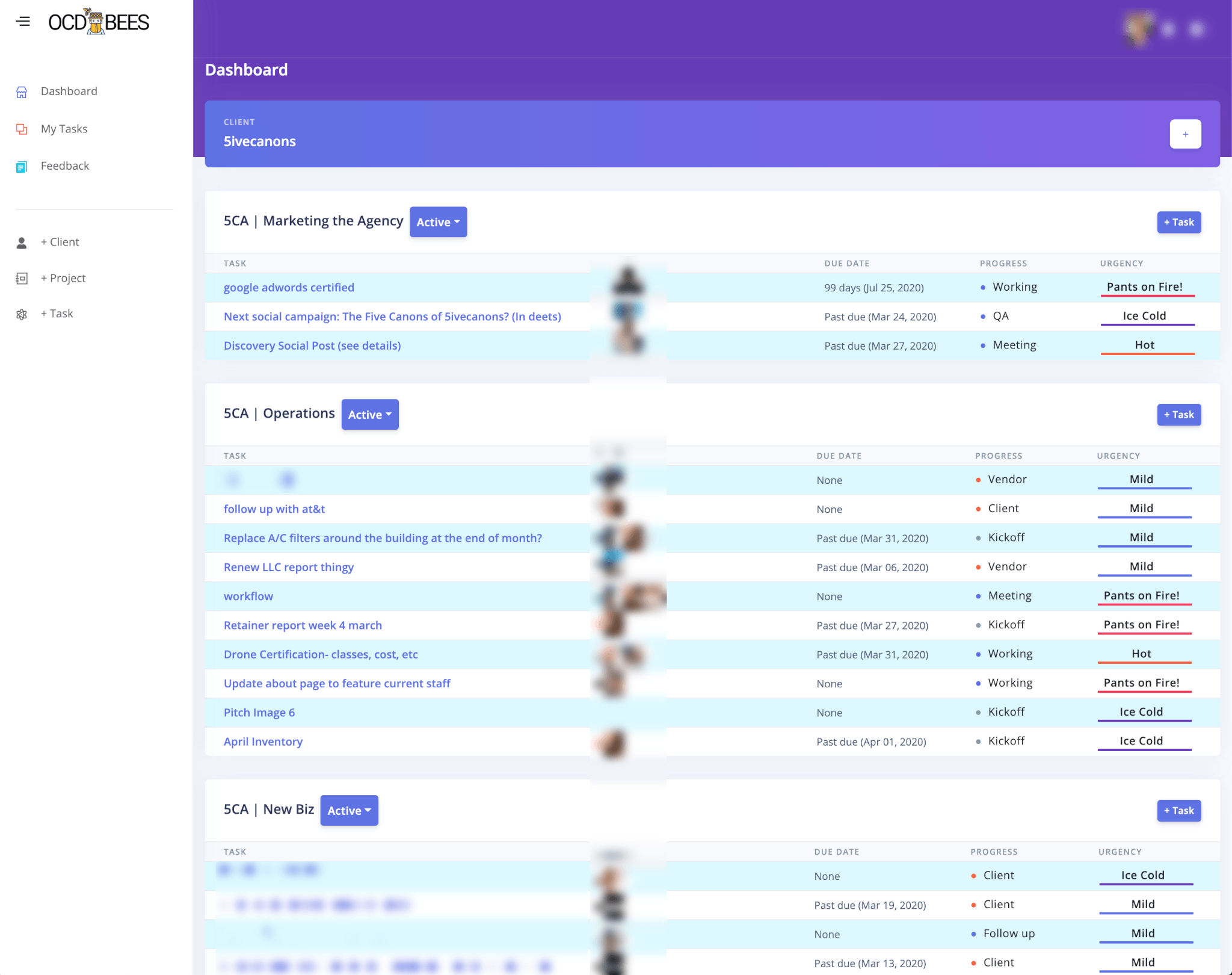
Projects came and went, clients changed, and our team grew and learned new ways of working. Through all of it, OCDBees was how we organized clients, assigned work, prioritized deadlines, and kept projects moving. When something needed immediate attention, it was Pants on Fire. When it could wait a bit, it was Hot, Mild, or Ice Cold. The thinking behind those manila folders was still there, just without the paper, the piles, or the illegible handwriting.
Over time, we also started questioning the traditional workweek. Did we really need five days to get everything done? Were we measuring productivity by hours spent at a desk, or by the quality of the work? In October 2020, we moved to a four-day workweek.
That decision wasn’t made possible by one piece of software. It took discipline, trust, communication, and a team committed to doing great work. But a simple system that kept everyone organized certainly helped. Our team could see what needed attention and who was responsible without spending half the day managing the work instead of doing it. That left more room for what matters outside work: family, community, volunteering, and living.
Building It Again, and Again
By 2023, the app had been part of our agency for years. It still worked, but the technology was aging and we had ideas for how to make it better, so we started modernizing it. What followed was a whole lot of wireframes, designs, development, testing, and revisions, plus the occasional moment of wondering why we’d decided to do this at all. We debated everything from how tasks should be organized to whether a dashboard really needed another button.
In March 2024, after a particularly difficult development meeting, I was overwhelmed by how complicated the project had become. That evening, at my son’s baseball game, I wrote out a clearer product strategy on my phone so everyone would understand what we were building, why, and what actually mattered. I missed his hit while writing it, which, looking back, was a pretty good reminder of why we wanted to make work simpler in the first place.
The strategy wasn’t revolutionary. Organize clients, projects, and tasks. Know who’s working on what. Make it easy to use and keep it affordable. Everything in its right place.
We kept working through bugs, delays, technical challenges, and plenty of debate about what belonged in the platform. By early 2025, I found myself repeating the same thing that started this whole journey: we needed something reliable, easier to use, and simple. The technology had changed, but the goal hadn’t.
If Not Now, When?
Artificial intelligence was changing how people worked, and fast. Suddenly, managing projects through a conversation didn’t seem far-fetched. What if you could just ask what needed attention today, or update tasks and find information without navigating menus? We had spent years simplifying how our team managed work, and AI was another chance to make it easier.
There was another question I couldn’t shake. If we had built something that made our agency more productive, supported our four-day workweek, and gave our team more time for the people and communities we care about, why were we keeping it to ourselves? Thousands of small businesses, creative agencies, nonprofits, and teams deal with the same frustrations we had: overwhelming software, expensive subscriptions, features they’ll never use, and processes built around the platform instead of the people. Maybe we could offer them something different, and do something good with it.
That thinking led us to Adobe MAX 2026 in Miami Beach, where we packed up a booth, brought our team, and introduced OCDBees to the public. After more than a decade of using it ourselves, we were finally sharing it.
A Simple Project Management Tool for Good
Today, OCDBees costs $3 per user, per month. You can organize clients, projects, tasks, and team members, set urgency, assign responsibility, track progress, and add deadlines when you need them. There’s no complicated system to design before you get started. It’s the same idea we sketched in that lobby years ago.
Making project management easier is only part of what we hope to accomplish. We believe businesses have an opportunity, and a responsibility, to make a positive impact in their communities. It’s the same idea behind our Marketing for Good approach to client work, and it’s why we built the Common Good into our mission. A portion of our profits is set aside as donations, and 100% of those donations go directly back into the community. None of it covers staff or operating expenses.
It’s a different way of thinking about what a software platform is for, but that’s okay with us. We’ve spent years learning that doing things differently can lead to pretty remarkable outcomes.
We Built It for Ourselves. Now We’re Sharing It.
When I think about where OCDBees started, I still picture that sheet of paper in the lobby. I didn’t know then that we’d use it for more than a decade, rebuild it with our team, or introduce it to the public at one of the biggest creative conferences in the world. I just wanted a better way to get things done, something that respected our time and let us focus on what mattered. That hasn’t changed.
If OCDBees helps another team get organized, spend a little less time managing software, and a little more time with their families or their communities, then we’ve built something worth sharing.
OCDBees Timeline: Key Moments
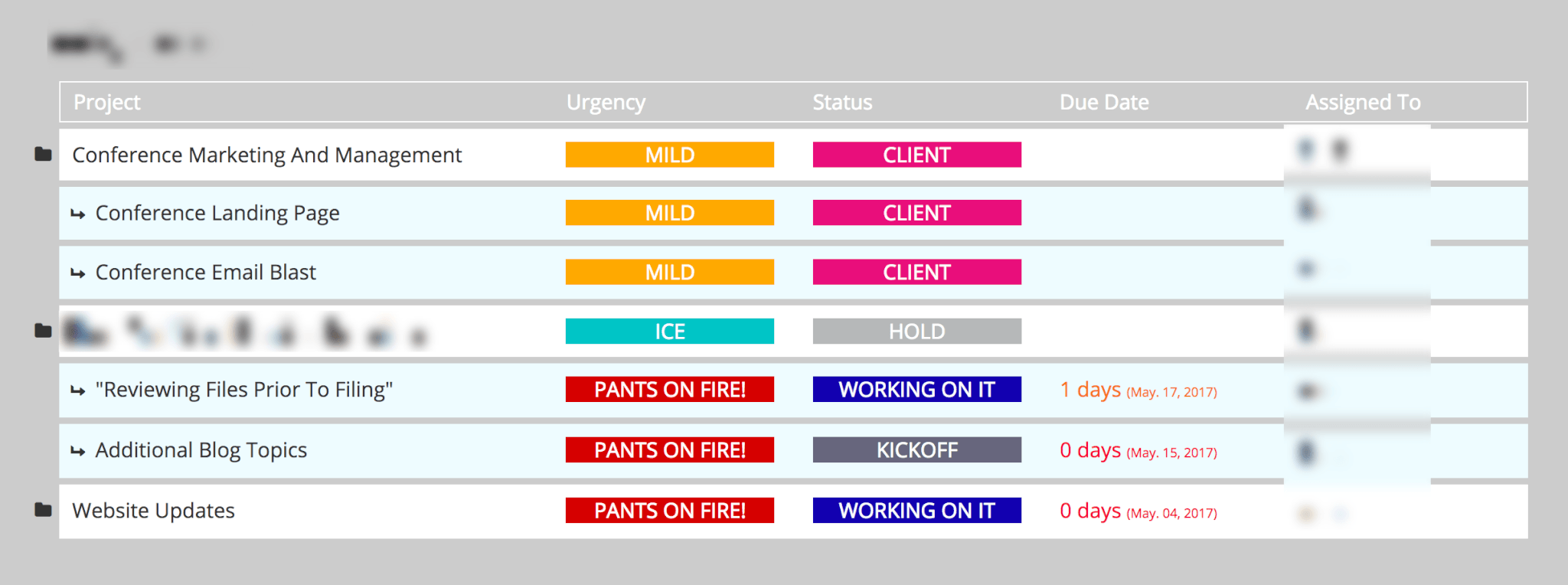
- May 2017: The earliest OCDBees screenshot in our archive. The urgency system, complete with a PANTS ON FIRE! label, is already in daily use.
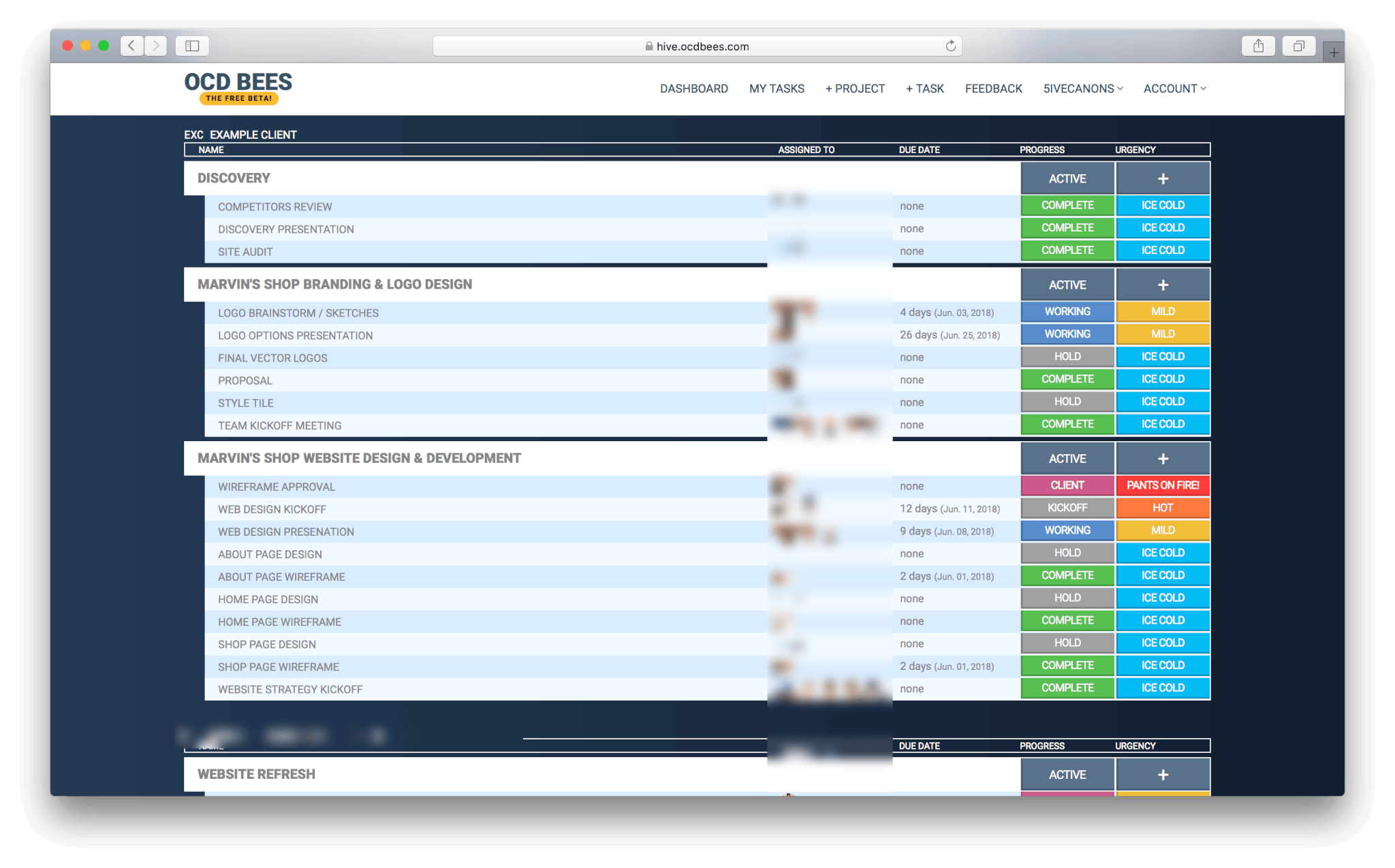
- May 2018: An early beta interface adds clearer views of projects, team assignments, and due dates.
- April 2020: A more modern dashboard shows clients, projects, task progress, and ownership in one place.
- October 2020: 5ivecanons moves to a four-day workweek.
- 2023: We begin modernizing the platform.
- March 2024: A new product strategy boils it down: organize clients, projects, and tasks, and keep everything in its right place.
- Early 2025: The goal gets even simpler. Reliable, easier to use, simple.
- November 2026: OCDBees is introduced to the public at Adobe MAX in Miami Beach, at $3 per user, per month.
Frequently Asked Questions About OCDBees
What is OCDBees?
OCDBees is a simple project management tool built by 5ivecanons, a creative agency in Jacksonville, Florida. It organizes clients, projects, and tasks, shows who owns each piece of work, and labels urgency so the team knows what needs attention first.
Why did a creative agency build its own project management software?
We were paying for software that did far more than we needed and expected our team to change how we worked. We built OCDBees around the way we already worked, then used it every day to run our client projects.
How much does OCDBees cost?
OCDBees costs $3 per user, per month, and new teams can start with a free 30-day trial.
Did OCDBees make the four-day workweek possible?
Not on its own. Our move to a four-day workweek in October 2020 took discipline, trust, and communication. A simple system that kept everyone organized made it easier to sustain.
Does OCDBees give back to the community?
Yes. A portion of profits is set aside as donations, and 100% of those donations go directly to the community. None of it covers staff or operating expenses.
Does OCDBees work with AI assistants?
Yes. OCDBees connects with AI assistants such as ChatGPT and Claude, so teams can review workloads, check priorities, and manage tasks in plain language.
Writing about agency life, project management, or the four-day workweek? You’re welcome to use the historical OCDBees screenshots in this post. Please credit 5ivecanons and link back to this article.
A simple project management tool for good.
Adam Schaffer is the chief creative officer of 5ivecanons, a creative agency based in the historic Downtown Duval Building at 10 South Newnan Street in downtown Jacksonville, Florida, and one of the people who built OCDBees.
